
Membership, for what?
What questions do we focus on when there is a crisis in basebuilding and a class to be developed?

Introduction
In 1903, the Russian Social Democratic Labour Party held it’s second party congress. Founded in 1898, it was a scattered project as the congress approached, with the hopes that the party would be consolidated around a program. Key leaders were arrested by the Russian Tsarist secret police, and there was little coordination between the local and national work because of it. Civil unrest was growing in all aspects of society. There was a vacuum, with huge tensions between factions within. Many of the labor leaders of the party were solely interested in economic demands of workers, such as better wages and working hours. They believed that the struggle against the Tsar was the task of the more liberal bourgeoise, and not for them to prioritize. Another group, those behind the leading newspaper Iskra at the time, thought that this would be disastrous. That workers need to fight for revolution, not narrow economic interests. The reality was that Revolution was inevitable, and there was a deep urgency in deciding how the party would attempt to shape it’s trajectory. And it is at this juncture, a huge split occurs. But not in a place that was expected. Two deeply close comrades and Iskra leaders, Vladimir Lenin and Julius Martov, engage in a bitter disagreement that would set in motion the historic split known as the Bolsheviks versus the Mensheviks. At a time where stakes were so high, can you guess what was the fundamental question that created this unexpected split?
It was “What is the definition of party membership?”.
Now if you are reading this, you are probably not leading an Organization of this kind. However, you may agree that we are in a crisis of basebuilding, with many trying to help articulate and chart forward a path to strengthen our work. And for this piece I wanted to offer an example that highlights an important aspect of the political work that we often do not talk about it depth:
“How does your organization define membership?”
Over the years, I have found that in the discussions of community basebuilding projects, this question is often not investigated. It is answered, of course, but we don’t tend to spend time on it. We often write out something that makes sense, but tend to not return to it or refine it. Especially in organizations that are not intended to be Cadre Organizations. We do discuss the number of members an organization believes it needs or the “strategic positioning” of the base. We know that we just need more members to join! We need members by the hundreds and thousands! But what will they practice? What do we want their character to be, and why? These questions feel priority to me, especially if we want to talk about committing to organizing fundamentals. We also know the leadership skills of the class can outlive any specific organization that may come and go. And if you believe that one’s practice shapes their consciousness, then you may come to believe that different basebuilding organizations may prioritize and specialize different things.
So this piece speaks to how we have used this question to change our organization. It is rooted on the belief that membership tiers in this period are not something that are static things on paper, but can be iterative in order to serve the organizations shifts. So we humbly offer this, hoping that it spurs conversations that can help continue to sharpen the type of practice we need in this period.
The First Shift - Raise the Standard of Membership
The first attempts of changing our membership came after I joined the organization after staff transitions. It was somewhat of a rectification process for the organization, which I talk about more specifically in a co-authored piece called Developing Mass Protagonism. We raised the standard of what it meant to be a member by increasing the attendance requirement significantly. In order to be a member, you had to successful complete at least 80% of the orientation sessions between Jan-Feb. Much of the events in the fall were recruitment events to create community and prepare members to saying yes to that ask, being explicit about the commitment. The sessions were comprised of hard skills that people would engage with in the organizational work, from having 1-1s, to making meeting agendas. They usually required a recruit to attend two weekdays and every other Saturday. At the end of Orientation, those who completed were celebrated at our signing day event, and then assigned to issue committees of their choosing. While those who could not make 80% could also be members, it helped served as an initial marker of the types of contributions people can make in that initial period, and the types of perks (like having access to certain trips or conferences).
There were two practical reasons for this shift. We used a high threshold for a reason. We structurally functioned as an advocacy group due to the fact that most of the organizing labor and strategic thinking was held by paid staff. To make this shift, we knew we needed more time with members to train and coach them. So the first reason was to create a way to try to select for members who could make the time. If you could make the 80% requirement, you had demonstrated the potential to make the time commitment to take on higher levels of work. And the second reason was tied to an emotional and culture obstacle in the organization. Many of the organizers, who were green, had a story in their head that “working class young people have too much going on, they don’t have the ability to commit to the time needed”. This process functioned as a hypothesis. If we were unable to grow, then this narrative will prove correct. Thankfully, we grew. While it initial effort lead to a short term contraction of our membership, the quality and clarity of membership changed, leading to future growth.
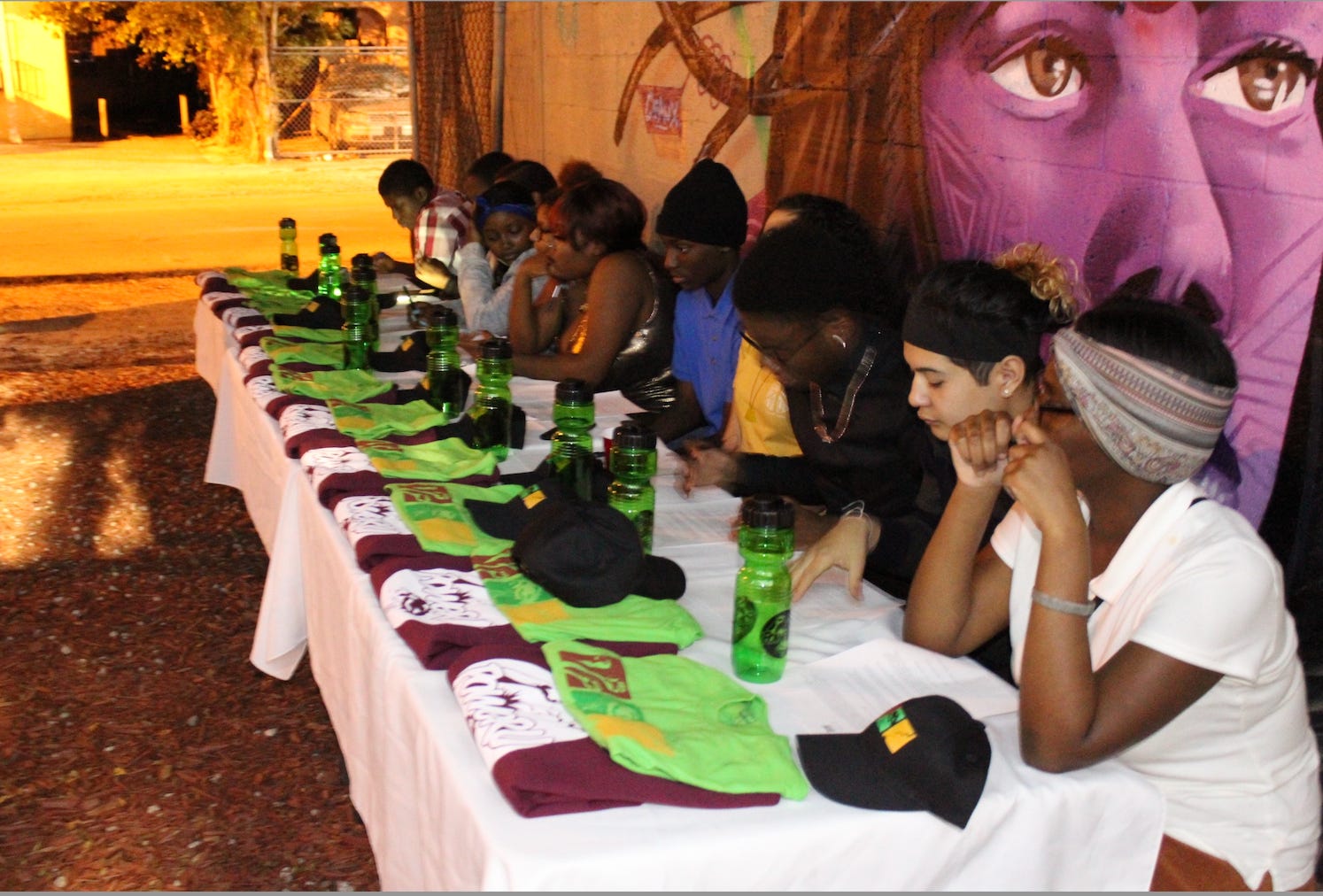
Our First Orientation (2019)
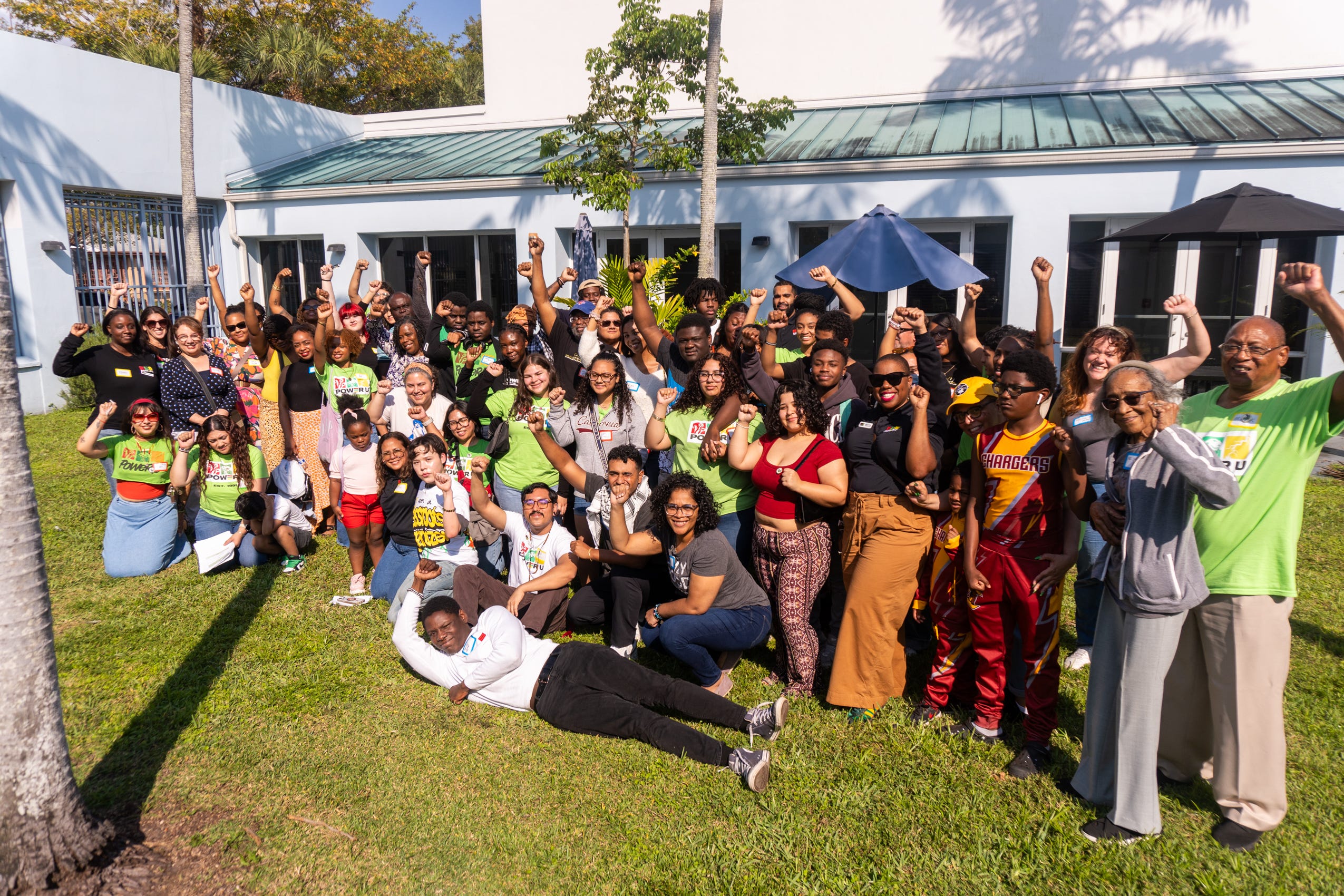
6th Signing Day (2025)
New Internal Conditions & Hitting the Ceiling
The process helped push the organizational culture towards a stronger basebuilding posture. The quality of membership was now comprised of people who were clearer about what the organization is supposed to do, and the expectations of membership. Some of our strongest mobilizations and recruitment came from years where we had students who were organic leaders, influencing both their peers and their teachers. There was a stronger culture of protagonism amongst the membership. But there were still structural things in the organization that made it challenging to full utilize this model. For this, I will lay out some of the conditions that led to refining our membership more.
For one, we cannot overstate the importance of having committed and consistent staff throughout the project. Being able to make long term commitments to track member’s trajectory makes all the difference, especially for our high school members. Yet this has been a struggle for us. Often, much of the staff organizers that were hired were unable to, or unwilling to make longer term commitments to the organization. This often led to parts of the organizational structure to fall apart when they left in an impromptu manner. Sometimes, due to relationships, key members lost interest or we lost contact with them all together. While it is outside the scope of this piece, this was also due to my errors in the types of people that I hired (to no real fault of those who did get hired). Every year, there has been some level of a staff rebuild, which has limited what we have been able to do. However, the institutionalization of this structure has helped play a role in onboarding people quicker, and identifying new staff who are more connected to the organization and have longer term commitments to Florida in general.
And due to the task of having to train consistently green organizers, it was difficult to engage and retain prospective members in this membership structure. The self selected crew of members flourished, but those that required some deeper work and agitation usually fell through the cracks. As green organizers struggled to get their bearings, this often lead to an annual process where the sharpest and committed 20% of membership would be remaining by the end of our annual campaign cycle. We didn’t have an explicit enough protocol for members who didn’t fully complete orientation, so newer organizers didn’t really feel that they could (or even needed) to engage the broader people beyond the most committed. Each year, our organization often plateaued around 15-30 Active Members, unable to get significant involvement beyond those numbers (across 3 organizers). This was also exacerbated by other organizational narratives, especially as we became more intergenerational in practice. There was an emerging belief that young people have the free time to make these commitments, but adults do not. There was a need to update a new hypothesis.
From 2021-2024, we were able to retain a relatively stable staff who had enough repetitions in our cycle to be able to collectively refine our membership in ways that could allows for more clarity along different levels of involvement. In September of 2024, we launched new membership tiers that better articulates expectations both for membership and paid staff.
The Refinement - Expanded Membership Tier
In our annual recalibration retreat, staff were able to reflect on their practice, and discuss some of the challenges that came with engaging and assessing members. We observed the members who came for reasons other than campaign work. For example, some cared about organizational culture, or cultural projects via communications. While this was happening, we began to observe that we need to be more explicit about our desired base. Members coming from specific key neighborhoods and schools, versus and open call. Given the lack of political projects in our neighborhoods, and the need to build power that can be express in specific place, we began to state that everyone who lives in this area should and could be a member of our organization. While this was always the case, consistently saying it to “sloganize” the idea was helpful for both newer organizers and members alike to better embody this orientation when engaging in field work. At the same time, our organization had new conditions. We now had a stabilized membership, and a culture of expectations that went beyond simply it being a social space. This created conditions for a more thorough expansion of how we categorized membership in the organization. This allowed us to refine our Membership Chart:
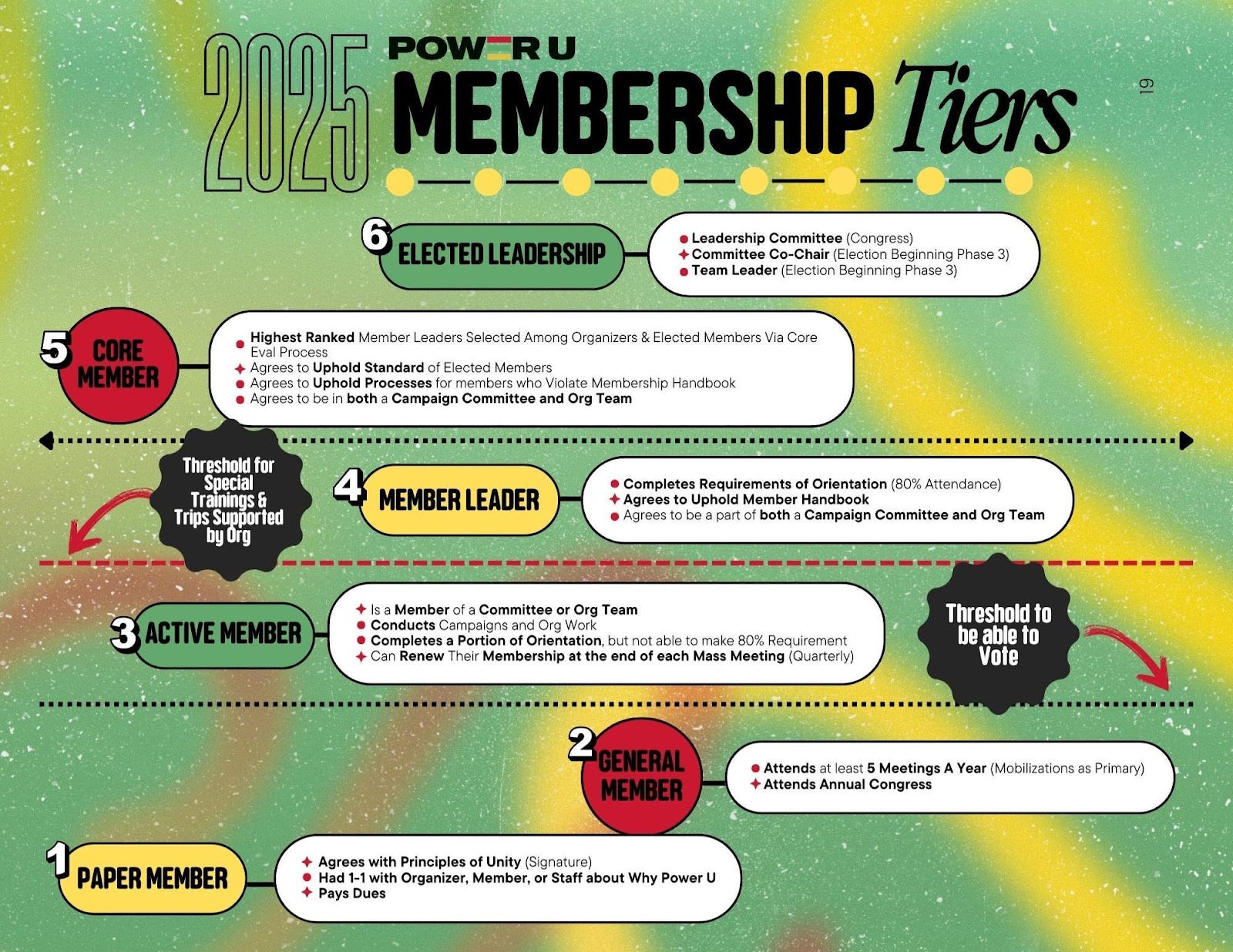
It is also accompanied by expectations of certain levels of membership. This is used to help support organizers think through the types of expectations they should have within their committees and think through more explicit propositions. Also, shoutout to Al Luta Sigue whose work has pushed us to sharpen this thinking.
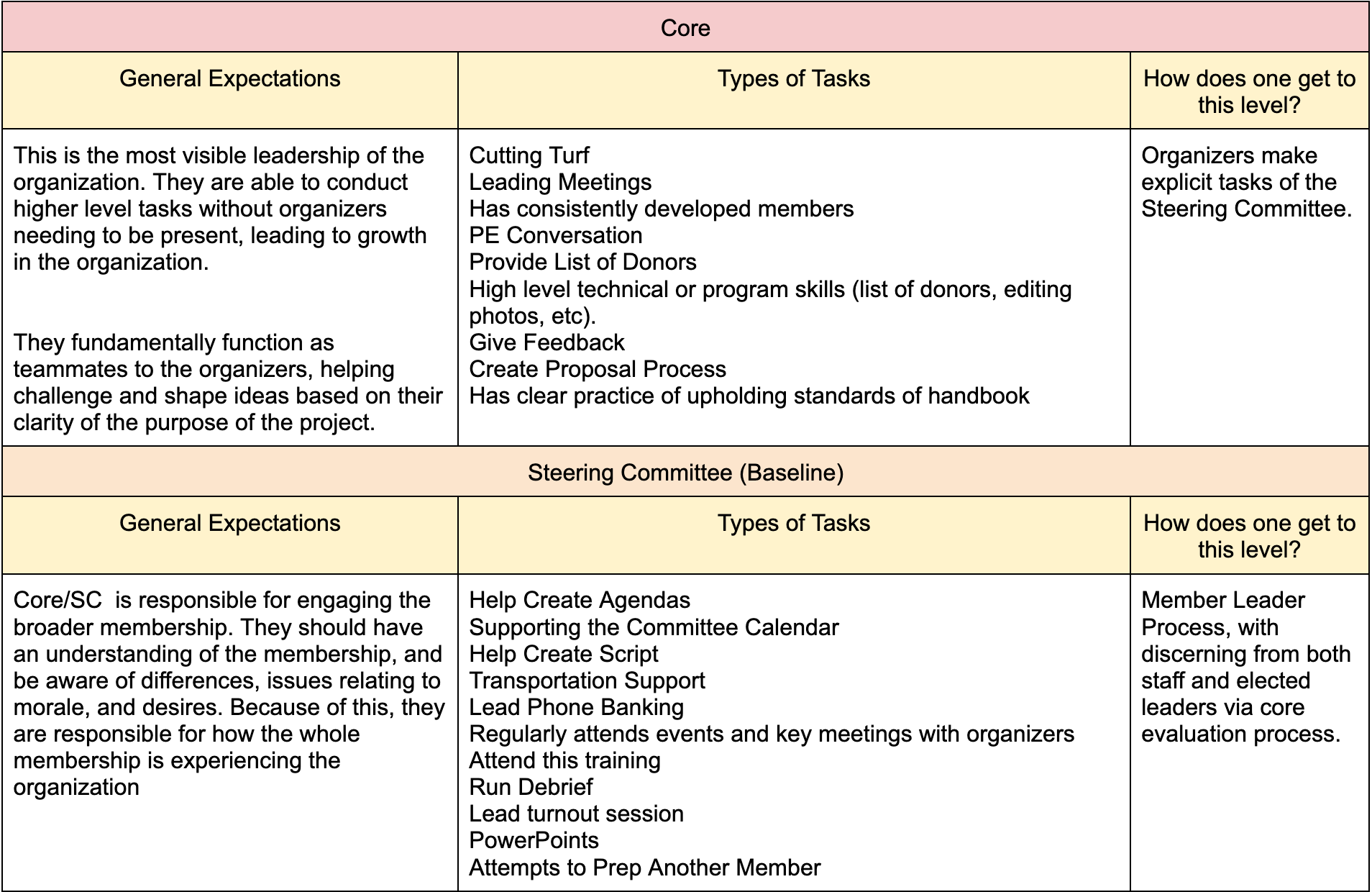
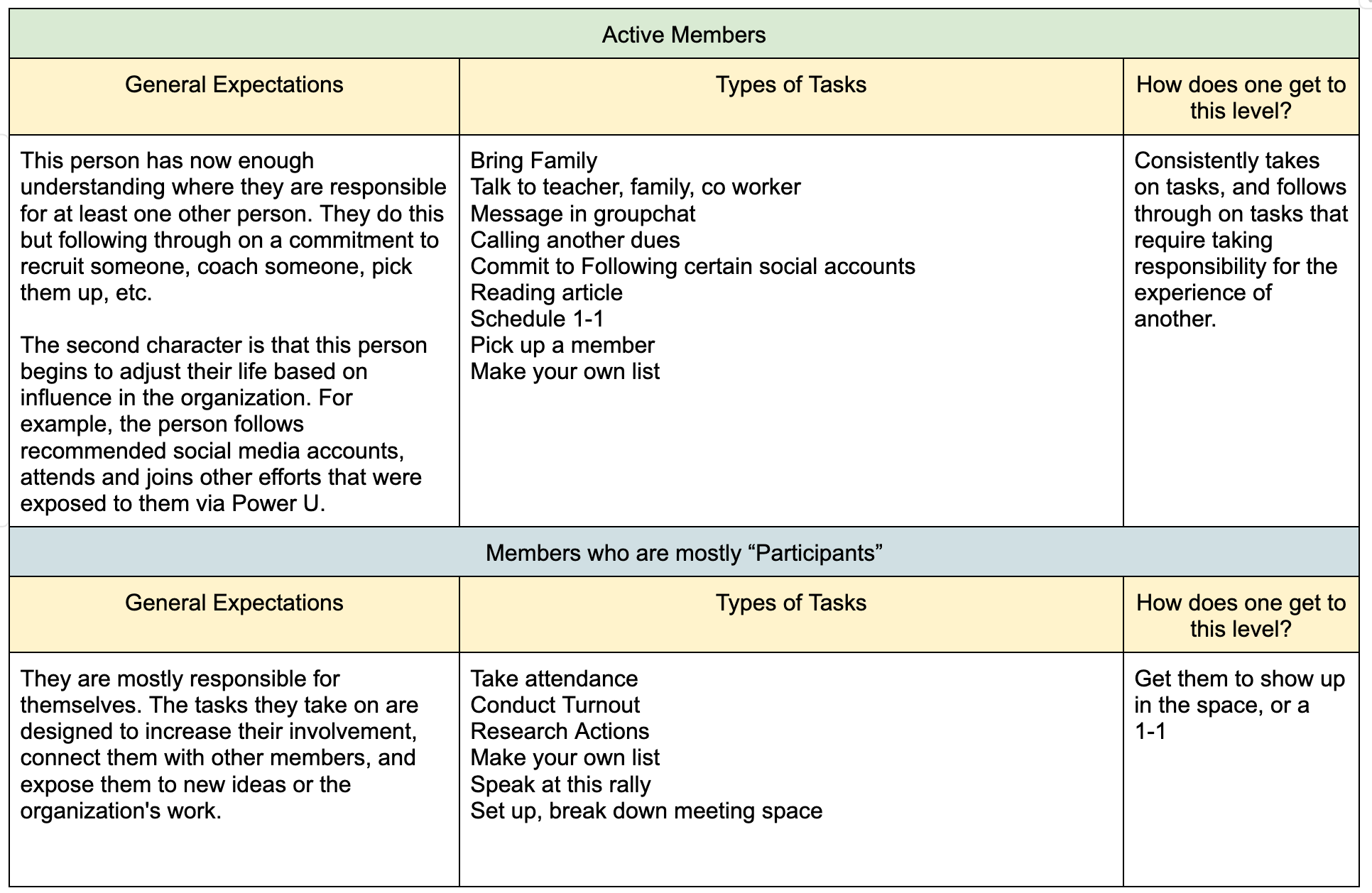
In this first year of implementation, this has supported the practice of the organizers and improved the character of our membership. We have had members who originally viewed themselves as simply a supporter of the organization, not having clearer opportunities for engagement. For example, one of our members, TP, originally saw her role as a supporter of young people. She would table at our events due to some of her work at a department at her local university. Through participation in our orientation, she saw that this organization is also a space for her, choosing to get heavily involved to the point that she is now our elected “Minister of Culture” of our Social-Emotional Cultural Team (SEC Team). This team is tasked with helping manage and assess the morale and care within the organizational membership. AC, who didn’t hear about our organization until after this year’s Orientation, was still able to help seed our initial core of members taking on our Universal Childcare Committee. “Alumni”, who were once no longer considered members, were engaged more consistently, helping create conditions where our organization now has a Chapter in a key local university and is on track to build out 3 more in other local colleges by end of this year. And It has also supported non organizing staff to take on a stronger pro-development orientation. They now have their own observations and grounds for how someone shows up in the organization. Overall, the team discussions are more congruent, and all staff now have an active interest in the coaching and the development of members they engage with. It is no longer just the task of the organizers to hold people accountable.
It is not that this wasn’t possible prior to this structure, but it was made explicit. Below is the overview of our 2025 Membership Drive. There is a small margin of error on this number at the moment, but the way we discuss members and how to move people up the ladder is more skillful than before.
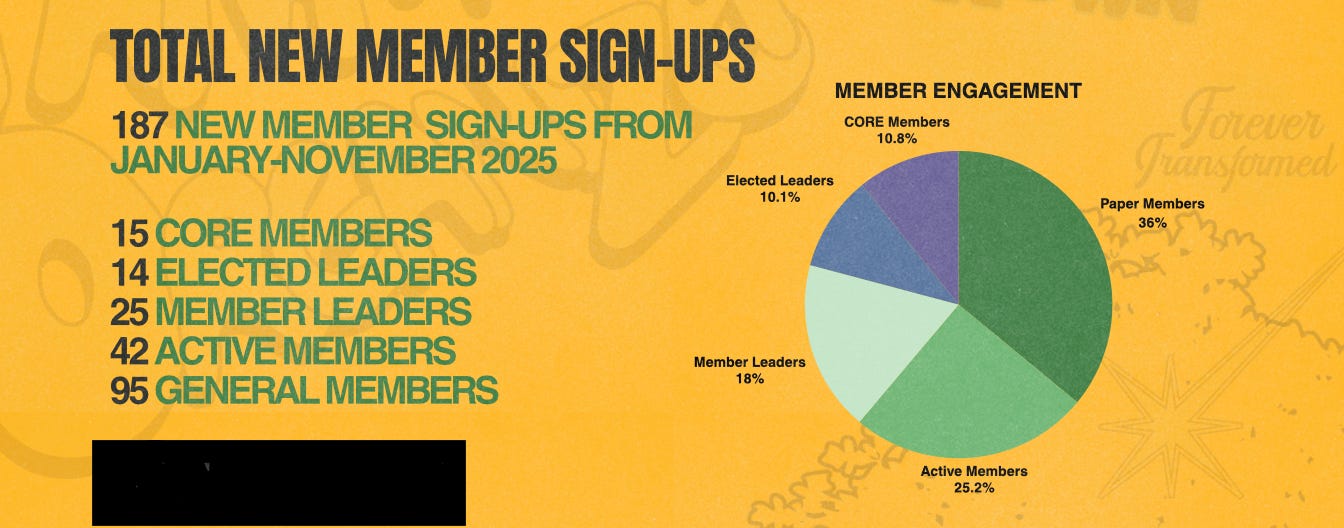
While we have a ways to go, this shift of the tiers in alignment with the development of where the organization is can serve as a example of how membership tiers do not have to be static things that live only on paper of a membership handbook. They represent an opportunity to increase the skill set of staff and members alike.
Where we can improve
Everyday, the organization moves closer to having more working class members lead key aspects of the organization. Each day, the organizers and core members have more structure to grow in their skillsets. But we need more refining. While our organization structures are strong, some of the breakdown that has occur has happened at the steering committee level of our committees and teams. While we have active participation, lack of clearer divisions of labor within those grouping have lead to members’s skillset not being fully utilize, or staff holding on to tasks that members can do with proper planning and support. We need to be even more specific in holding different roles within the steering committee. This upcoming year, we think that having clearer long term roles and responsibilities within these structures will increase cohesiveness and the number of members who actually feel ownership of key aspects of the organization. Our exposure to deeper thinking on distributed leadership movements through the Build the Base Training Program has helped us begin to refine and improve on some of our initial gaps.
Key Takeaways
Throughout the past 6 years, we have learned a lot about team design and implementation. At a time where being a member of an organization can mean anything, grappling with the very question informs what organizers and members will practice. History, as we saw with the 1903 congress, can remind us of this fact. If standards are loose, then our membership will be loose. If the membership standards are thorough and specific, it allows for more intention across all positions. It allows for the organization to collectively stretch, especially when our current membership doesn’t reflect the quality or character we need to meet the moment. In fact, the very question of membership can help cohere a project. That was ultimately the case for us.
Membership tiers and leader ladders do not have to be static documents. They can be dynamic things that help facilitate the internal transformation of an organization. But it requires intention, and a commitment to following through for to test something out. We do not think that our memberships shifts are THE answer, but it does give us a lot of data and grounds to have a more technical conversation with groups that can raise the standards of all parties involved. We no longer blindly accept when an community organization tells us that it has 10,000 members. We want to see how it’s broken down specifically, and what members do. We do not believe that email sign ups on a list-serve matter.
Such a experimental and more rigorous posture can support the standards of the local organizing ecosystem. But it does require organizers to be are open and honest with each other about what they are actually trying, and what is working or not working. At a time where organizations are increasingly at risk, the more we need to actually come together raise our standards of various levels of practice. It is possible, and our people deserve it.